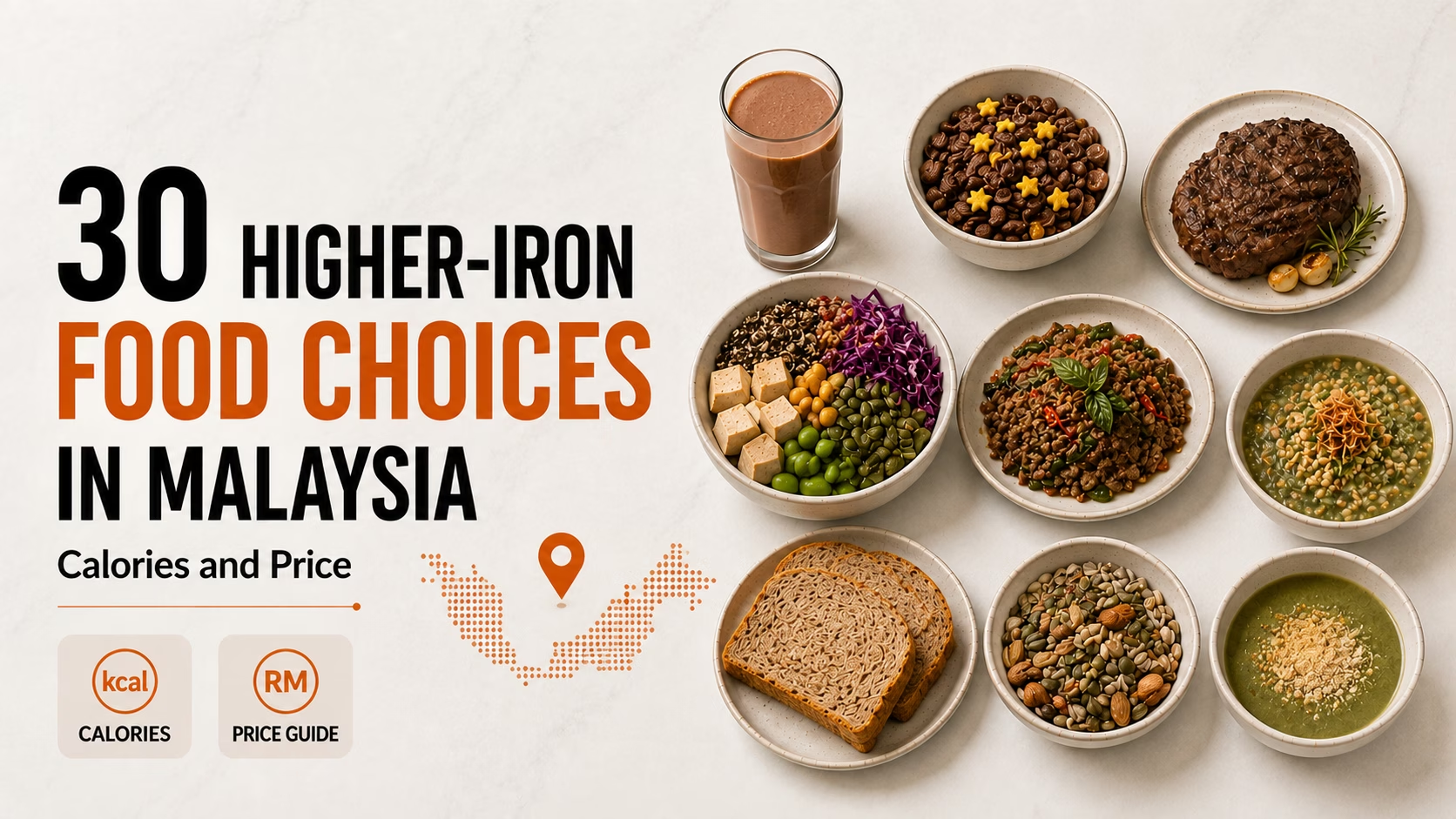
Getting more iron does not necessarily mean cooking liver, beef, lentils or spinach at home every day.
In Malaysia, you can find iron in many foods that require little or no cooking, including:
- Fortified breakfast cereals
- Fortified malt drinks
- Bread
- Ready-to-eat beef
- Meal-prep meals
- Tofu bowls
- Chickpea and bean meals
- Seeds
- Sardines
- Vegetarian restaurant meals
But iron is more complicated to compare than simply looking for the food with the biggest number.
There are two major forms of dietary iron:
heme iron and non-heme iron.
Meat, poultry and seafood contain both heme and non-heme iron, while plant foods and iron-fortified foods contain non-heme iron. Heme iron is generally more bioavailable, while absorption of non-heme iron is more strongly affected by the other foods eaten with it.
That means:
5 mg of iron from fortified cereal
and
5 mg of iron from beef
are not necessarily absorbed in exactly the same way.
For this guide, we therefore compare more than just total iron.
We look at:
- Iron per serving
- Percentage of Malaysia’s Nutrient Reference Value
- Calories
- Approximate price
- Whether the iron is fortified, plant-based or from animal foods
- Vitamin C where relevant
- Iron per 100 calories
- Approximate cost for 4 mg of iron
The goal is not to declare one food universally better.
It is to answer a practical question:
If you do not want to cook, what foods can you realistically buy in Malaysia that can contribute meaningful amounts of iron?
Important: Product formulations, menu ingredients, serving sizes, nutrition information and prices can change over time. Malaysia-specific manufacturer information is used whenever available. Where restaurants do not publish iron, estimates are clearly marked and are based on listed ingredients and representative food-composition data rather than being presented as official restaurant nutrition values.
Quick Answer
Some of the most interesting choices in this comparison are:
| Priority | Choice | Approx. Iron |
|---|---|---|
| Highest published iron per selected serving | Anlene Total 10 | 6.5 mg |
| High iron for relatively few calories | MILO Intense Dark Chocolate | 6.3 mg / 130 kcal |
| High iron + high fiber drink | MILO Hi-Fibre | 4.9 mg + 4.2 g fiber |
| Higher-iron ready beef | Medofu Beef Steak 200 g | ~5 mg* |
| Fortified breakfast cereal | Honey Stars / MILO Cereal / Fitnesse | ~4.2 mg |
| Plant-based customizable meal | The Fish Bowl tofu + quinoa + legumes/seeds | ~4–5 mg* |
| Beef complete meal | Dietmonsta Basil Minced Beef | ~3–4 mg* |
| Plant-heavy complete meal | Simple Life Lei Cha | ~4 mg* |
| Convenient bread option | Gardenia iron-enriched breads | ~2.5–3.5 mg reference* |
| Portable nuts/seeds option | Signature Market Classic Seed Mix | ~2.5 mg* |
*Estimated or reference value rather than an official current product iron declaration.
What Does “Higher-Iron” Mean in This Guide?
Malaysia’s nutrition-labelling Nutrient Reference Value, or NRV, for iron is:
14 mg.
That gives us some useful comparison points:
| Iron per serving | Approx. Malaysia NRV |
|---|---|
| 2 mg | 14% |
| 3 mg | 21% |
| 4 mg | 29% |
| 4.2 mg | 30% |
| 5 mg | 36% |
| 6 mg | 43% |
| 7 mg | 50% |
However, this requires an important clarification.
Malaysia’s official conditions for making a “source of” or “high in” vitamin/mineral claim are not based simply on the amount in whatever serving size a person chooses.
For vitamins and minerals, the Malaysian guidelines define claim conditions using nutrient levels per:
- 100 g for solid foods
- 100 ml for liquids
- or 100 kcal
and “high” requires at least twice the corresponding “source of” level.
So in this article:
4.2 mg per serving = 30% of Malaysia’s 14 mg NRV
is used as a practical comparison marker.
It should not be interpreted as saying every food containing 4.2 mg per serving legally qualifies to use a Malaysian “high in iron” claim.
This is also why the article is titled:
Higher-Iron Food Choices
rather than claiming that every one of the 30 foods is officially “high in iron.”
Why Does Your Body Need Iron?
Iron is an essential mineral.
One of its best-known roles is as part of hemoglobin, the protein in red blood cells involved in transporting oxygen around the body.
Iron is also involved in:
- Myoglobin in muscle
- Energy metabolism
- Certain enzymes
- Normal cellular functions
The amount of iron a person needs can vary substantially according to age, sex and life stage.
This is particularly important for iron because requirements are not the same for everyone.
So this article uses the 14 mg Malaysia NRV as a standardized food-comparison reference rather than as a personalized daily target.
Heme Iron vs Non-Heme Iron
This is one of the most important concepts in this entire guide.
Heme Iron
Found in animal foods such as:
- Beef
- Other meats
- Poultry
- Fish
- Seafood
These foods contain heme iron as well as non-heme iron.
Heme iron generally has better bioavailability and is less affected by the composition of the rest of the meal.
Non-Heme Iron
Found in:
- Beans
- Lentils
- Chickpeas
- Tofu
- Tempeh
- Seeds
- Vegetables
- Whole grains
- Fortified cereals
- Fortified drinks
Iron added to breakfast cereals and malt drinks is also non-heme iron.
Non-heme iron absorption can vary substantially depending on what else you eat.
Vitamin C Can Help With Non-Heme Iron
Vitamin C is particularly relevant when iron comes primarily from plant foods or fortified foods.
NIH notes that vitamin C enhances the bioavailability of non-heme iron.
That means combinations such as:
lentils + tomato
tofu + capsicum
beans + citrus fruit
fortified cereal + fruit
can make nutritional sense.
Interestingly, several fortified drinks in this comparison already contain vitamin C.
For example:
MILO Intense Dark Chocolate
provides per 33 g serving:
- 6.3 mg iron
- 23.1 mg vitamin C
- 130 kcal
- 4 g protein
- 2.6 g fiber
according to MILO Malaysia.
Anlene Gold 5X also combines:
4.7 mg iron + 30 mg vitamin C
per 40 g serving.
That does not allow us to calculate exactly how much iron an individual will absorb.
But it is useful context.
How We Compared the 30 Choices
We use three evidence labels.
P — Published
The iron amount is directly published by the Malaysian manufacturer or current Malaysia-specific product page.
R — Reported
The product is currently available in Malaysia, but the iron figure comes from a Malaysia-specific secondary, retailer or older formula reference.
E — Estimated
The restaurant or brand does not publish iron.
Eat Ate Here estimated it from:
- Listed ingredients
- Approximate portion
- Malaysian or established food-composition references
Estimated numbers are rounded deliberately.
They should not be treated as laboratory analysis of the finished restaurant meal.
30 Higher-Iron Food Choices in Malaysia
The choices are approximately ranked by iron per listed or reference serving.
| Rank | Food / Menu Choice | Serving | Iron | % Malaysia NRV | Calories | Approx. Price | Data |
|---|---|---|---|---|---|---|---|
| 1 | Anlene Total 10 | 55 g | 6.5 mg | 46% | 208 | ~RM3.70 | P |
| 2 | MILO Intense Dark Chocolate | 33 g | 6.3 mg | 45% | 130 | ~RM1.45 | P |
| 3 | Medofu Beef Steak | ~200 g beef | ~5.0 mg | ~36% | ~400 | RM24.90 | E |
| 4 | MILO Hi-Fibre | 30 g | 4.9 mg | 35% | 118 | ~RM0.88 | P |
| 5 | Anlene Gold 5X Plain | 40 g | 4.7 mg | 34% | 148 | ~RM1.90 | P |
| 6 | Anlene Gold 5X Dark Chocolate | 40 g | 4.7 mg | 34% | 148 | ~RM1.90 | P |
| 7 | Anlene Gold 5X Café Latte | 40 g | 4.7 mg | 34% | 141 | ~RM1.90 | P |
| 8 | Anlene CholestoPro | 40 g | 4.7 mg | 34% | 153 | ~RM2.00 | P |
| 9 | The Fish Bowl BYO: quinoa + tofu + legumes/seeds | 1 bowl | ~4.5 mg | ~32% | ~500 | ~RM25 | E |
| 10 | Nestlé Honey Stars | 30 g | 4.2 mg | 30% | 115 | ~RM1.10 | P |
| 11 | Nestlé MILO Cereal | 30 g | 4.2 mg | 30% | 114 | ~RM1.10 | P |
| 12 | Nestlé Fitnesse Flakes | 30 g | 4.2 mg | 30% | 112 | ~RM1.20 | P |
| 13 | Salad Atelier Chicken Teriyaki Poke | 1 bowl | ~4.0 mg | ~29% | 278 | RM21.75 | E |
| 14 | Simple Life Lei Cha | 1 meal | ~4.0 mg | ~29% | ~450 | ~RM22 | E |
| 15 | The Fish Bowl Hawaiian Tofu | 1 bowl | ~3.8 mg | ~27% | ~450 | ~RM14.90 | E |
| 16 | Dietmonsta Basil Minced Beef | 1 meal | ~3.5 mg | ~25% | 422 | RM20 | E |
| 17 | Dietmonsta Black Pepper Beef | 1 meal | ~3.5 mg | ~25% | 482 | RM20 | E |
| 18 | MILO Original Powder | 30 g | 3.5 mg | 25% | 123 | ~RM0.80 | P |
| 19 | Gardenia Original Classic | ~2 slices | ~3.5 mg | ~25% | ~159 | ~RM0.45 | R |
| 20 | Nestlé Koko Krunch | 30 g | 3.3 mg | 24% | 112 | ~RM1.10 | P |
| 21 | MILO Biscuits | 24 g | 3.3 mg | 24% | 108 | ~RM1–1.50 | P |
| 22 | NESTUM Fruits | 28 g | 3.1 mg | 22% | — | ~RM1 | R/P |
| 23 | Horlicks Original | 30 g | 3.1 mg | 22% | 115 | ~RM0.83 | R |
| 24 | Nestlé Gold Cornflakes | 30 g | ~3.4 mg | ~24% | 113 | ~RM1 | P |
| 25 | MILO Less Sugar | 27 g | 3.0 mg | 21% | 110 | ~RM1.39 | P |
| 26 | Ayam Brand Sardines with Edible Bones | ~1 can | ~3.0 mg | ~21% | ~297 | ~RM5–6 | R/E |
| 27 | Medofu Beef BBQ | ~100 g beef | ~2.5 mg | ~18% | ~250 | RM11.90 | E |
| 28 | Medofu Beef Garlic Blackpepper | ~100 g beef | ~2.5 mg | ~18% | ~250 | ~RM11–12 | E |
| 29 | Gardenia Breakthru Whole Wheat, ~2 slices | ~60 g | ≥~2.5 mg reference | ≥~18% | ~150 | ~RM0.60 | R |
| 30 | Signature Market Classic Seed Mix | 30 g | ~2.5 mg | ~18% | ~170 | RM3.20 | E |
The current Anlene Malaysia nutrition panels directly list 6.5 mg iron per serving for Total 10 and 4.7 mg for Gold 5X variants. Total 10 also supplies 12 g protein, 3 g fiber and 30 mg vitamin C per serving.
MILO Malaysia directly publishes 6.3 mg iron for Intense Dark Chocolate, 4.9 mg for Hi-Fibre, 3.5 mg for the standard powder and 3.0 mg for Less Sugar in the listed serving sizes.
Nestlé’s current Malaysian cereal pages list 14 mg iron per 100 g for Honey Stars, MILO Cereal and Fitnesse, which works out to approximately 4.2 mg per 30 g serving. Current Koko Krunch lists 11 mg/100 g, or about 3.3 mg per 30 g, while Gold Cornflakes lists 11.2 mg/100 g, or about 3.4 mg per 30 g.
Nestlé Malaysia’s nutrition-label example lists 3.1 mg iron per 28 g serving of NESTUM Fruits.
Price Note: Prices are approximate September 2026 Malaysia reference prices. For foods sold in larger packages, the table estimates the price of the listed serving rather than the full package. Retailer, outlet, state, delivery platform, promotion and package size can change the actual price.
Which Choice Has the Most Published Iron per Serving?
Among foods with direct current manufacturer iron data, the highest selected choice is:
Anlene Total 10
One 55 g serving provides:
6.5 mg iron
That is approximately:
46% of Malaysia’s 14 mg NRV.
It also provides:
- 208 kcal
- 12 g protein
- 3 g dietary fiber
- 30 mg vitamin C
- 600 mg calcium
- 0.9 µg vitamin B12
Anlene publishes all of these values on its current Malaysian nutrition panel.
At approximately RM53.90 for an 800 g pack in current Malaysian retail listings, one 55 g serving costs approximately:
RM3.70.
This makes it a highly fortified product rather than a naturally iron-dense whole food.
That distinction matters.
MILO Intense Is Particularly Iron-Dense for Its Calories
One 33 g serving of MILO Intense Dark Chocolate provides:
6.3 mg iron
for:
130 calories.
That equals approximately:
4.85 mg iron per 100 calories.
It also provides:
- 4 g protein
- 2.6 g fiber
- 23.1 mg vitamin C
- 231 mg calcium
- 9.9 g total sugars
according to the current MILO Malaysia panel.
Current September 2026 listings put a 400 g tin at roughly RM17.50–19 in common promotional listings, giving a 33 g serving a reference cost of around RM1.45–1.60.
Again, much of the iron advantage comes from fortification.
That does not make it less real iron.
But it does make it nutritionally different from beef, tofu or lentils.
MILO Hi-Fibre Combines Iron and Fiber
MILO Hi-Fibre is particularly interesting because the primary advantage is not only iron.
Per 30 g serving, the manufacturer lists:
4.9 mg iron
4.2 g dietary fiber
18 mg vitamin C
118 calories
3.3 g protein.
Current 900 g listings are around RM26.50, which gives an approximate 30 g serving cost of:
RM0.88.
For someone comparing convenient fortified drinks, this is one of the stronger combinations of:
iron + fiber + vitamin C
in the list.
But it is still a malt beverage rather than a complete meal.
Fortified Cereals Can Provide a Lot of Iron in a Small Serving
Breakfast cereals perform strongly because several are deliberately fortified with iron.
Honey Stars
A 30 g serving provides approximately:
4.2 mg iron
115 kcal
~1.8 g fiber
The Malaysian product page explicitly labels it high in iron.
MILO Cereal
A 30 g serving provides:
~4.2 mg iron
114 kcal
and approximately:
2.2 g fiber.
Fitnesse
A 30 g serving provides:
~4.2 mg iron
112 kcal
and approximately:
3 g fiber.
The current Malaysia page identifies whole grain as its first ingredient and describes it as high in iron and fiber.
Koko Krunch
The current Malaysian product page gives:
11 mg iron / 100 g
which works out to:
~3.3 mg per 30 g serving.
One Nestlé Malaysia iron article gives a somewhat higher serving reference for Koko Krunch, illustrating that formulations or reference materials can differ. For consistency, this guide uses the current product-page composition rather than the higher article figure.
That is an important data-quality principle for this entire series:
when current product-level nutrition and broader marketing material disagree, prefer the current product nutrition panel.
Fortified Iron Is Non-Heme Iron
This is important.
The iron added to cereals and fortified beverages is non-heme iron.
That means you should not assume:
4.2 mg cereal iron
is biologically identical to:
4.2 mg iron from a meat-containing meal.
NIH notes that heme iron generally has higher bioavailability than non-heme iron. Meal composition also has a stronger effect on non-heme iron absorption.
This does not make fortified foods useless.
Fortification can contribute substantial iron intake.
It simply means iron content and iron absorption are different concepts.
Beef Changes the Comparison
Once we move away from fortified products, beef becomes particularly interesting.
Beef does not necessarily show the giant iron number you see on a fortified cereal label.
But it contains heme iron, plus substantial protein.
Medofu Beef Steak
Medofu currently sells a ready beef steak portion of approximately 200 g for around RM24.90.
Based on representative cooked-beef composition, a portion of that size may provide around:
~5 mg iron
depending on the exact cut and cooking method.
This is an estimate, not a published Medofu iron figure.
The important difference is that some of this iron is heme iron.
Medofu Beef BBQ
A roughly 100 g cooked-beef portion is estimated around:
~2.5 mg iron
with the current product priced around:
RM11.90.
Again, the exact iron content of the finished restaurant item has not been published, so it remains an estimate.
Dietmonsta Basil Minced Beef
Dietmonsta currently lists this ready meal at:
422 kcal
37 g protein
RM20
using approximately 120 g of beef with basmati rice and accompanying ingredients.
Based on the beef portion and other ingredients, we estimate roughly:
~3–4 mg iron
for the complete meal.
The value should not be treated as a laboratory measurement.
Iron and Protein Often Overlap in Meat-Based Foods
This creates a very different pattern from Calcium.
For example:
Fortified cereal
may provide:
4 mg iron + 2–3 g protein
while:
Beef meal
may provide:
3–4 mg iron + 30–40 g protein
Neither is automatically better.
The first may deliver more iron for fewer calories and less money.
The second provides:
- Heme iron
- Much more protein
- A full meal
So the decision depends on what you are actually trying to eat.
Plant-Based Meals Can Also Provide Meaningful Iron
Iron is not only found in meat.
Malaysian food-composition data show meaningful iron in foods such as tofu, legumes, lentils and several leafy vegetables.
For example, the Malaysian Food Composition Database lists approximately:
2.6 mg iron / 100 g for a tofu reference and around 1.8 mg / 100 g for tempeh.
Dry lentils can be considerably higher before cooking and dilution with water.
This makes restaurant meals containing several plant iron sources especially interesting.
The Fish Bowl: Build Iron Into the Bowl
The Fish Bowl is particularly useful because its menu is customizable.
Current Malaysia menu listings include options such as:
- Tofu
- Tempeh
- Chickpeas
- Quinoa
- Seeds
- Vegetables
along with build-your-own bowls.
A bowl built around:
quinoa + tofu + chickpeas or edamame + seeds + vegetables
could reasonably provide around:
4–5 mg iron
depending on the actual scoop sizes.
That number is estimated.
But the strategy is useful:
Instead of relying on one ingredient, combine several moderate non-heme iron sources.
Hawaiian Tofu Is Another Plant-Based Example
Current Malaysian listings for The Fish Bowl Hawaiian Tofu include ingredients such as:
- Tofu
- Corn
- Cucumber
- Tomatoes
- Walnuts
- Pumpkin seeds
- Sesame seeds
- Flax seeds
Depending on portion sizes, we estimate approximately:
~3–4 mg iron
for the bowl.
The iron comes primarily from plant ingredients and is therefore non-heme.
Adding vitamin-C-rich vegetables or fruit elsewhere in the meal can help support non-heme iron absorption.
Salad Atelier: Legumes and Seeds Matter
A salad is not automatically a meaningful iron source.
Lettuce by itself is not enough to make a meal iron-rich.
A more interesting example is a bowl that combines several ingredients.
Salad Atelier’s Chicken Teriyaki Poke includes foods such as:
- Edamame
- Chickpeas
- Black beans
- Mixed seeds
- Chicken
- Vegetables
The published menu lists the meal around:
278 kcal
with a reference price around:
RM21.75.
Based on the listed components, its iron content may be around:
~4 mg, depending on portion sizes.
That is an estimate.
The key lesson is that:
beans + edamame + seeds
can change the iron profile of a salad much more than simply adding extra lettuce.
Lei Cha Can Be an Interesting Plant-Iron Meal
Simple Life’s current menu includes Lei Cha, a meal built around grains, vegetables, herbs and plant ingredients.
Depending on recipe and portion, a lei cha meal can combine several sources of non-heme iron.
We use an approximate reference of:
~4 mg iron
for comparison.
Again, exact restaurant values can vary.
This meal also illustrates why iron from plant foods needs to be understood differently from beef.
The iron amount may look similar on paper, but absorption may not be the same.
Vitamin C Is Particularly Useful With Plant-Based Iron
If you choose a plant-heavy iron meal, one simple strategy is to include a vitamin-C-rich food.
Examples include:
- Guava
- Orange
- Kiwi
- Papaya
- Capsicum
- Tomato
- Broccoli
Vitamin C can enhance absorption of non-heme iron.
That means something as simple as:
tofu bowl + capsicum
or:
lentil meal + tomato + fruit
can be nutritionally relevant.
The goal is not to micromanage every bite.
It is simply useful to know that iron absorption depends partly on the food combination.
What Can Reduce Non-Heme Iron Absorption?
Certain dietary components can reduce absorption of non-heme iron.
NIH specifically discusses compounds such as:
- Phytate
- Certain polyphenols
as factors that can reduce non-heme iron bioavailability.
This is why tea and coffee are sometimes discussed in relation to iron-containing meals.
But this should not become:
Never drink tea.
or:
Beans are bad because they contain phytate.
Foods such as whole grains and legumes provide many useful nutrients.
The practical point is simply that the amount of iron on paper is not the only factor controlling absorption.
Gardenia Shows How Everyday Staples Can Be Fortified
Iron does not need to come from a specialty “nutrition food.”
Gardenia’s current Original Classic is still made with added iron, while Breakthru Whole Wheat is explicitly described by Gardenia Malaysia as high in iron.
Gardenia currently prices:
Original Classic 400 g — RM3.00
and:
Breakthru Whole Wheat 400 g — RM4.00.
An older Malaysia nutrition reference for Original Classic gave approximately:
3.5 mg iron
for a roughly two-slice serving.
Because recipes can change, we mark that number R rather than treating it as a guaranteed 2026 formulation.
For Breakthru Whole Wheat, the current official high-in-iron claim confirms meaningful iron content, but the exact current iron amount per two slices is not displayed on the public product page.
So we use a conservative claim-based reference rather than inventing a precise label value.
Seeds Can Contribute Iron Too
Signature Market’s Classic Seed Mix combines:
- Pumpkin seeds
- Melon seeds
- Sunflower seeds
and currently sells a 150 g pack for around RM16.
A 30 g serving costs around:
RM3.20
and is estimated to provide approximately:
~2.5 mg iron
depending on the exact seed composition.
Seeds also contribute:
- Fat
- Protein
- Magnesium
- Other minerals
which means they are relatively energy-dense.
So they may provide useful iron without necessarily being a low-calorie choice.
Sardines Provide a Different Nutritional Package
Ayam Brand sardines are another convenient food that requires almost no preparation.
The current Malaysia product information for Sardines in Tomato Sauce with Chilli lists a 70 g serving at approximately:
134 kcal
11.8 g protein
and substantial calcium from the edible bones.
A secondary product-composition reference puts iron around 1.9 mg per 100 g, which would make a 155 g can roughly:
~3 mg iron.
We therefore classify this figure as reported/estimated, not manufacturer-published iron.
Unlike cereal or tofu, fish contains heme as well as non-heme iron.
It also provides significant protein.
Which Choices Give the Most Iron per 100 Calories?
Using foods with relatively reliable published figures:
| Food | Iron | Calories | Iron / 100 kcal |
|---|---|---|---|
| MILO Intense Dark Chocolate | 6.3 mg | 130 | 4.85 mg |
| MILO Hi-Fibre | 4.9 mg | 118 | 4.15 mg |
| Anlene Gold 5X Café Latte | 4.7 mg | 141 | 3.33 mg |
| Anlene Gold 5X Plain | 4.7 mg | 148 | 3.18 mg |
| Anlene Gold 5X Dark Chocolate | 4.7 mg | 148 | 3.18 mg |
| Anlene CholestoPro | 4.7 mg | 153 | 3.07 mg |
| Honey Stars | 4.2 mg | 115 | 3.65 mg |
| MILO Cereal | 4.2 mg | 114 | 3.68 mg |
| Fitnesse | 4.2 mg | 112 | 3.75 mg |
| MILO Original Powder | 3.5 mg | 123 | 2.85 mg |
| Koko Krunch | 3.3 mg | 112 | 2.95 mg |
| Gold Cornflakes | ~3.4 mg | 113 | ~3.0 mg |
| MILO Less Sugar | 3.0 mg | 110 | 2.73 mg |
Fortified foods dominate this table because manufacturers can add relatively large amounts of iron without dramatically increasing calories.
But again:
iron per 100 calories does not measure absorption.
A beef meal may score lower mathematically while providing heme iron and far more protein.
Which Choices Are Cheapest for Iron?
For a standardized comparison, we can use:
Cost per 4 mg iron
Four milligrams is close to:
29% of Malaysia’s 14 mg NRV.
It is simply a comparison unit—not an intake recommendation.
Approximate examples:
| Food | Approx. Cost / 4 mg Iron |
|---|---|
| MILO Hi-Fibre | ~RM0.72 |
| MILO Original Powder | ~RM0.90 |
| MILO Intense Dark Chocolate | ~RM0.92 |
| Honey Stars | ~RM1.05 |
| MILO Cereal | ~RM1.05 |
| Horlicks Original | ~RM1.07 |
| Anlene Gold 5X | ~RM1.62 |
| Anlene CholestoPro | ~RM1.70 |
| Anlene Total 10 | ~RM2.28 |
| Signature Market Seed Mix | ~RM5.12 |
| Beef restaurant meals | Usually higher |
The exact order can change with promotions.
Fortified powdered products and cereals perform very strongly on pure:
RM per mg iron
because fortification makes iron inexpensive to add.
That does not mean you should obtain all of your iron from fortified powdered drinks.
It simply answers a specific question:
How much does this source cost for a standardized amount of iron?
Fortified vs Naturally Occurring Iron
This deserves its own comparison.
Fortified Choices
Examples:
- Anlene
- MILO
- Honey Stars
- MILO Cereal
- Fitnesse
- Koko Krunch
- Gold Cornflakes
- NESTUM
- Horlicks
- Fortified breads
Advantages can include:
- Clear iron numbers
- High iron concentration
- Low cost per mg iron
- Convenience
- Sometimes added vitamin C or B vitamins
But the added iron is generally non-heme.
Naturally Occurring / Food-Based Sources
Examples:
- Beef
- Sardines
- Tofu
- Tempeh
- Chickpeas
- Beans
- Seeds
- Leafy vegetables
They often provide additional nutritional benefits such as:
- Protein
- Fiber
- Healthy fats
- Other minerals
- A fuller meal
Animal foods may also provide heme iron.
The question is therefore not:
Fortified or natural—which is good and which is bad?
Both can contribute to dietary iron.
They simply provide it differently.
What If You Do Not Eat Meat?
You can still obtain iron.
Vegetarian-friendly choices in this guide include:
- Fortified cereals
- Fortified malt drinks
- NESTUM
- Iron-enriched bread
- Tofu bowls
- Tempeh
- Chickpeas
- Beans
- Lei cha
- Seeds
The key difference is that this iron is primarily:
non-heme iron.
Because non-heme iron has lower and more variable bioavailability, pairing plant iron sources with vitamin-C-rich foods becomes especially useful.
A practical example:
Tofu + beans + vegetables + fruit
rather than expecting one single ingredient to supply everything.
What If You Want Around 4 mg of Iron?
Four milligrams is a useful practical comparison point.
Choices close to or above it include:
Anlene Total 10
6.5 mg
MILO Intense Dark Chocolate
6.3 mg
MILO Hi-Fibre
4.9 mg
Anlene Gold 5X
4.7 mg
Anlene CholestoPro
4.7 mg
Honey Stars
4.2 mg
MILO Cereal
4.2 mg
Fitnesse
4.2 mg
Selected tofu + legume bowls
around 4 mg or more, estimated
Selected beef meals
around 3–5 mg, depending on serving and cut
This shows that meaningful iron can come from very different kinds of food.
Why We Do Not Calculate an “Absorbed Iron Score”
It would be tempting to say:
Beef = 3 mg iron × absorption percentage = exactly X mg absorbed.
We should not do that.
Iron absorption varies according to:
- Iron status
- Form of iron
- Meal composition
- Vitamin C
- Phytate
- Polyphenols
- Other dietary factors
- Individual physiology
The body also adjusts iron absorption according to iron status.
So a precise:
“You will absorb exactly 0.83 mg from this meal”
would create false precision.
A better approach is:
- Compare iron content.
- Identify whether the source is largely heme or non-heme.
- Consider meal composition.
- Avoid pretending absorption can be predicted exactly for every reader.
A Better Way to Choose Iron Foods When You Are Not Cooking
Instead of asking:
“Which product has the most iron?”
ask several questions.
How Much Iron Does the Serving Provide?
Start with milligrams.
Is the Iron Heme or Non-Heme?
Beef and seafood provide some heme iron.
Plants and fortified foods provide non-heme iron.
Does It Come With Vitamin C?
Especially useful for non-heme iron.
Does It Provide Protein?
Beef, tofu, tempeh and sardines can contribute both iron and protein.
Does It Provide Fiber?
Legumes, seeds, whole grains and some fortified cereals may provide both.
Is It a Complete Meal?
A 30 g cereal serving and a beef rice bowl are different eating occasions.
How Much Does It Cost?
Fortified foods may be very inexpensive per mg iron.
Restaurant meals usually cost more but provide substantially more total food.
What the Numbers Do Not Tell You
Even this comparison has important limitations.
Iron Absorption Is Variable
Iron consumed is not the same as iron absorbed.
Restaurant Iron Is Rarely Published
Many restaurant values in this article are estimates.
Beef Iron Varies by Cut
Different cuts and cooking methods produce different values.
Plant Portions Vary
The amount of tofu, beans or seeds in a bowl can change the estimate substantially.
Fortified Products Can Be Reformulated
Always check the current label.
Price Changes
Especially with promotions and delivery platforms.
Iron Needs Differ Greatly
A standard food-label NRV is useful for comparison but is not personalized advice.
The Most Important Thing to Remember
Iron is one of the nutrients where the largest number on the label does not tell the whole story.
Fortified drinks and cereals can provide very high iron amounts for relatively few calories and very little money.
Beef may provide a somewhat smaller number but contains more bioavailable heme iron and substantial protein.
Tofu, beans, chickpeas, tempeh and seeds provide non-heme iron along with other plant nutrients.
Vitamin C can improve the absorption of non-heme iron.
So instead of looking for one “perfect” iron food, think in terms of:
Iron amount
Iron form
What comes with it
What you eat with it
Convenience
Price
You do not have to cook everything yourself to find meaningful sources of iron in Malaysia.
You simply need to know what you are comparing.
Key Takeaways
- This guide compares 30 higher-iron foods and ready-to-buy choices available in Malaysia.
- Malaysia’s nutrition-labelling NRV for iron is 14 mg.
- 4.2 mg equals about 30% of that NRV, but it should not be treated as a universal per-serving legal definition of “high in iron.”
- Anlene Total 10 provides 6.5 mg iron per 55 g serving.
- MILO Intense provides 6.3 mg iron per 33 g serving.
- MILO Hi-Fibre provides 4.9 mg iron + 4.2 g fiber per 30 g serving.
- Honey Stars, MILO Cereal and Fitnesse provide approximately 4.2 mg iron per 30 g serving based on their current Malaysian product composition.
- Beef, poultry and seafood contain both heme and non-heme iron.
- Plant foods and fortified foods contain non-heme iron.
- Heme iron generally has higher bioavailability.
- Vitamin C can enhance non-heme iron absorption.
- Tofu, legumes, seeds and plant-based bowls can make meaningful contributions to iron intake.
- Fortified foods generally provide some of the cheapest iron per milligram.
- The food with the highest iron number is not automatically the food from which you will absorb the most iron.
- Overall dietary pattern and individual iron needs still matter.
Frequently Asked Questions
Which Food Has the Most Iron in This Comparison?
Among products with current manufacturer-published serving data, Anlene Total 10 provides the most at:
6.5 mg iron per 55 g serving.
MILO Intense Dark Chocolate is close at:
6.3 mg per 33 g serving.
Is 4 mg of Iron a Lot?
Four milligrams represents approximately:
29% of Malaysia’s 14 mg nutrition-labelling NRV.
Whether that is a large portion of an individual’s actual daily requirement depends on age, sex, life stage and other factors.
Is Iron From Beef Better Than Iron From Cereal?
“Better” is too simple.
Beef contains heme iron, which generally has higher bioavailability.
Fortified cereal can provide a larger total iron amount per serving and may be inexpensive and convenient.
Both can contribute to iron intake.
Is Plant Iron Absorbed?
Yes.
Plant foods contain non-heme iron, which the body can absorb.
Its absorption is generally lower and more affected by meal composition than heme iron.
Vitamin C can enhance non-heme iron absorption.
Which Vegetarian Foods Contain Iron?
Examples include:
- Fortified cereals
- Fortified drinks
- Tofu
- Tempeh
- Lentils
- Chickpeas
- Beans
- Seeds
- Whole grains
- Leafy vegetables
Does Spinach Contain Iron?
Yes.
But iron content varies considerably between varieties and preparation methods, and spinach also contains compounds that affect mineral bioavailability.
It should be treated as one iron-containing food rather than as the only plant iron source.
Can Vitamin C Help Iron Absorption?
Yes, particularly for non-heme iron.
Vitamin-C-rich foods such as guava, citrus fruit, kiwi, capsicum, tomato and broccoli can be useful alongside plant or fortified iron sources.
Does Coffee or Tea Affect Iron Absorption?
Certain polyphenols can reduce non-heme iron absorption.
The practical importance depends on the whole diet and individual circumstances, so this does not mean everyone must completely avoid tea or coffee.
Are Fortified Foods a Real Source of Iron?
Yes.
The iron is added during manufacturing, but it still contributes dietary iron.
However, fortified iron is generally non-heme and should not automatically be treated as biologically identical to heme iron from meat.
Why Are Some Restaurant Numbers Estimated?
Most Malaysian restaurants do not publish iron in milligrams.
When an item contains known iron sources such as beef, tofu, chickpeas or seeds, we can make a rounded practical estimate from its listed ingredients and representative food-composition data.
Those figures are always marked E rather than presented as official nutrition data.
Should I Take an Iron Supplement Instead?
Not automatically.
Iron supplements provide much larger and more concentrated amounts than ordinary foods and are not something everyone should take without a reason.
People concerned about iron status, diagnosed deficiency, pregnancy-related requirements or supplementation should obtain individualized advice from a qualified healthcare professional.
How We Calculated the Numbers
Percentage of Malaysia NRV
Iron %NRV = iron per serving ÷ 14 mg × 100
Example:
Anlene Total 10:
6.5 ÷ 14 × 100
≈ 46% NRV
Iron per 100 Calories
Iron per 100 calories = iron ÷ calories × 100
Example:
MILO Intense:
6.3 ÷ 130 × 100
≈ 4.85 mg iron per 100 calories
Cost per 4 mg Iron
Cost per 4 mg iron = serving price ÷ iron × 4
Example:
If a serving costs RM1.50 and provides 6 mg iron:
RM1.50 ÷ 6 × 4
= RM1.00 per 4 mg iron
Four milligrams is simply a standardized comparison amount close to 29% of Malaysia’s iron NRV.
It is not a recommended amount for every meal.
Sources and Data Notes
Malaysia Iron Reference and Labelling
Malaysia’s food-labelling guideline uses an iron NRV of 14 mg. Malaysian “source of” and “high in” vitamin/mineral claims are based on defined nutrient concentrations per 100 g, 100 ml or 100 kcal, so this article does not treat a simple serving cutoff as a legal claim definition.
Anlene Malaysia
Current official Malaysia nutrition panels were used for Total 10, Gold 5X and CholestoPro.
MILO Malaysia
Current official Malaysia nutrition information was used for Intense Dark Chocolate, Hi-Fibre, original powder, Less Sugar and selected MILO foods.
Nestlé Breakfast Cereals Malaysia
Current Malaysia cereal pages were used for Honey Stars, MILO Cereal, Fitnesse, Koko Krunch and Gold Cornflakes.
NESTUM
Nestlé Malaysia’s nutrition-label reference was used for the 3.1 mg iron figure for NESTUM Fruits.
Gardenia
Current Gardenia Malaysia pages confirm that Original Classic contains added iron and that Breakthru Whole Wheat is described as high in iron. Current official prices were used; historical/reference serving iron values are marked accordingly rather than presented as current laboratory data.
Dietmonsta
Current meal composition, calories, protein and prices were used. Iron values were estimated from the listed beef portions and other ingredients.
Medofu
Current product portions and prices were used. Iron values for beef products are estimates based on representative cooked-beef composition because Medofu does not publish iron values for these foods.
The Fish Bowl
Current Malaysia menu information was used for bowl ingredients and prices. Iron values were estimated from tofu, tempeh, chickpeas, quinoa, seeds and other components.
Malaysian Food Composition References
Malaysian food-composition data were used as references for estimating plant foods such as tofu and tempeh rather than copying exact values from unrelated restaurant products. The Malaysian Food Composition Database lists, for example, representative iron values for tofu and tempeh.
Iron Absorption
NIH iron references were used for the distinction between heme and non-heme iron and for the effects of vitamin C, phytate and other meal components on iron bioavailability.
Disclaimer
This article is for general informational and educational purposes only. It is not intended to provide personalized dietary, nutritional or medical advice.
Iron requirements vary substantially according to factors such as age, sex, life stage, dietary pattern, health status and individual circumstances. Iron deficiency and iron overload are medical issues that should not be self-diagnosed from food intake alone. People concerned about their iron status or considering iron supplementation should consult a qualified healthcare professional or registered dietitian for advice appropriate to their situation.