Potassium is probably not the first nutrient you think about when deciding what to eat outside.
Protein is easier to notice.
Fiber is easier to associate with vegetables.
Calories are printed on many menus.
But potassium is found throughout many everyday foods—including foods you can buy without cooking anything yourself.
Useful sources can include:
- Bananas
- Avocado
- Potatoes
- Sweet potatoes
- Beans
- Chickpeas
- Soy foods
- Leafy vegetables
- Fish
- Milk and yogurt
- Prunes
- Coconut water
Malaysia’s Recommended Nutrient Intakes list foods such as banana, soybean, chickpea, kidney bean, tuna, cashew nuts, spinach, potato, sweet potato and yogurt as potassium sources.
So the practical question for this guide is:
If you are eating outside or simply do not want to cook, which foods and drinks available in Malaysia can help contribute more potassium?
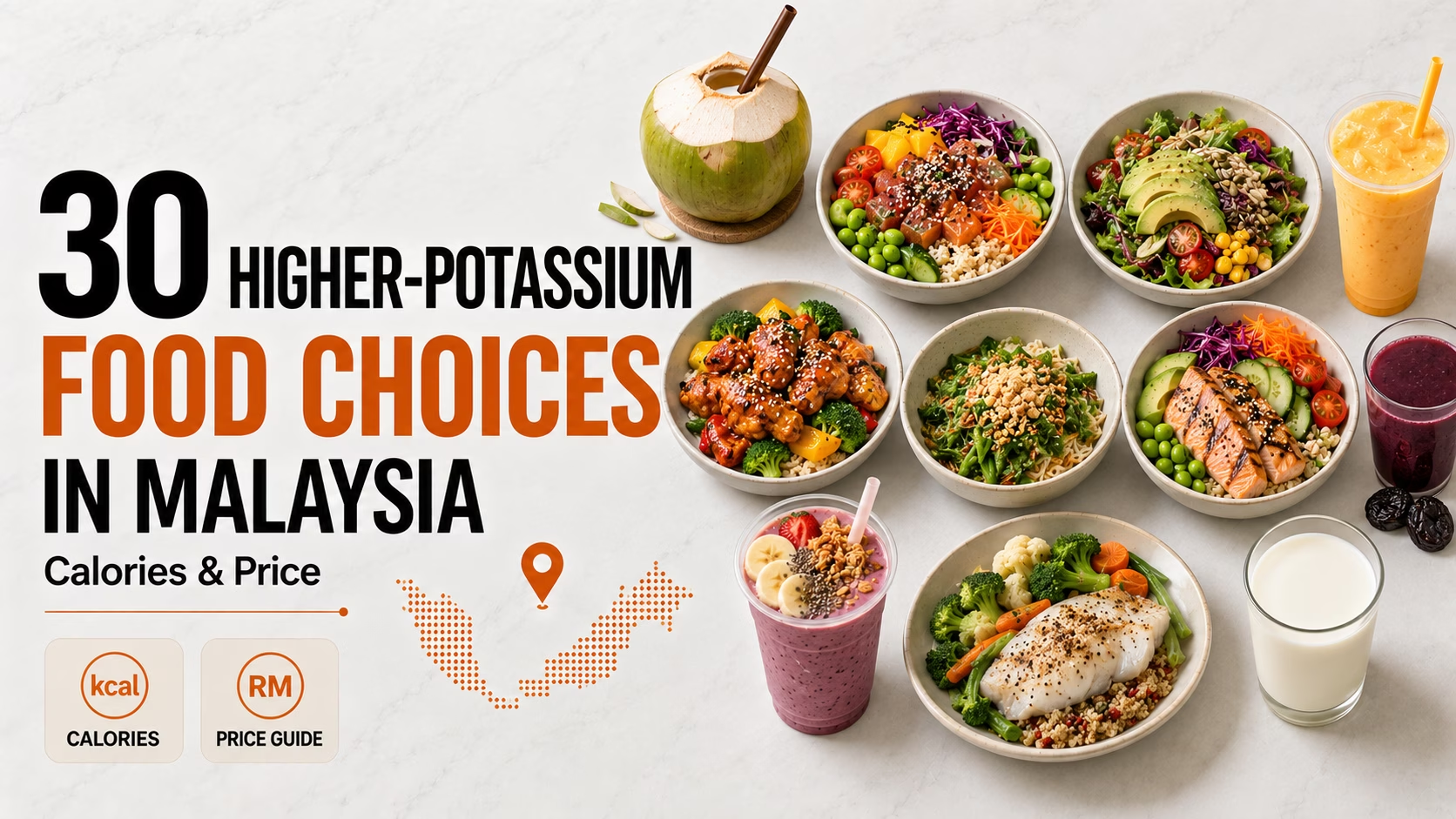
We selected 30 practical food and drink choices from more than 10 brands available in Malaysia.
The main comparison is:
Potassium per serving
We also consider:
- Calories
- Approximate price
- Percentage of Malaysia’s adult potassium RNI
- Potassium per 100 calories
- The main ingredients supplying potassium
- Sodium where it is particularly relevant
Important: Potassium is not routinely published on Malaysian restaurant menus. Direct manufacturer values are used where available. For many restaurant foods, potassium is estimated from the listed ingredients and representative food-composition values. Estimated figures are intentionally rounded and should not be treated as laboratory measurements of the finished meal.
Quick Answer
Some of the most interesting choices are:
| Priority | Choice | Approx. Potassium |
|---|---|---|
| Highest directly published option | UFC Refresh 100% Coconut Water 500 ml | ~1,075 mg |
| Plant-based complete meal | Something Poke Buddha Bowl | ~850 mg* |
| Avocado-focused lighter option | Salad Atelier Summer Avo Salad | ~850 mg* |
| Chicken + sweet potato + broccoli | YoloFoods Cajun Orange Chicken | ~800 mg* |
| Traditional plant-heavy meal | Simple Life Lei Cha | ~800 mg* |
| Salmon + edamame combination | Salad Atelier Grilled Salmon Poke | ~800 mg* |
| Convenient smoothie | Boost Protein Supreme | ~650 mg* |
| Ready protein + vegetables | Medofu Dory with Vegetables | ~550 mg* |
| Convenient fruit product | Sunsweet Prune Juice | 430 mg / 240 ml |
| Simple dairy choice | Farm Fresh UHT Fresh Milk | ~375 mg / 250 ml* |
*Estimated potassium.
There is no single winner because these are very different foods.
A bottle of coconut water is not equivalent to a tofu bowl.
A banana smoothie is not equivalent to salmon and vegetables.
And a 200-calorie protein-and-vegetable meal is not nutritionally identical to a beverage with a similar potassium amount.
How Much Potassium Do Adults Need?
Malaysia’s Recommended Nutrient Intakes set potassium at:
4.7 g per day
or:
4,700 mg/day
for adults aged 19–50, with the same reference for men and women in that age group.
WHO uses a somewhat different population-level recommendation and suggests at least:
3,510 mg/day
for adults.
These numbers are not necessarily contradictory.
Different organizations can establish nutrient recommendations using different methodologies and purposes.
For this Malaysia-focused article, we use:
4,700 mg
as our standardized comparison reference.
That does not mean every individual personally needs exactly 4,700 mg.
What Does Potassium Do?
Potassium is an essential mineral and electrolyte.
It is involved in functions including:
- Normal nerve signalling
- Muscle contraction
- Fluid balance
- Normal cellular function
Potassium and sodium also interact physiologically.
WHO notes that adequate dietary potassium can help counter some of the effects of high sodium intake on blood pressure, while encouraging potassium intake primarily through foods such as fruits and vegetables.
For this article, however, the focus is food selection rather than treatment or disease prevention.
How We Compared the Foods
Because potassium data are less commonly published than calories or protein, we use three evidence categories.
P — Published
The manufacturer directly publishes potassium.
R — Reference
The product is currently sold in Malaysia, but the potassium value uses the manufacturer’s broader product reference or an established food-composition reference.
E — Estimated
Potassium was estimated from:
- The menu’s published ingredients
- Representative serving amounts
- Malaysia Food Composition data
- Other established food-composition references
Estimated numbers are rounded.
For example, Malaysia’s RNI food table lists approximately:
- Banana — 379 mg potassium / 100 g
- Soybean — 397 mg / 100 g
- Chickpea — 345 mg / 100 g
- Kidney bean — 315 mg / 100 g
- Tuna — 344 mg / 100 g
- Cashew — 410 mg / 100 g
- Spinach — 385 mg / 100 g
- Potato — 203 mg / 100 g
- Sweet potato — 210 mg / 100 g
- Yogurt — 153 mg / 100 g
Different varieties and cooking methods can produce different values.
30 Higher-Potassium Food Choices in Malaysia
The list is approximately ordered by potassium per serving.
| Rank | Food / Menu Choice | Potassium | % of 4,700 mg RNI | Calories | Approx. Price | Data |
|---|---|---|---|---|---|---|
| 1 | UFC Refresh 100% Coconut Water — 500 ml | 1,075 mg | 23% | 110 | ~RM8–12 | P |
| 2 | UFC Refresh Coconut Water + Matcha — 500 ml | 950 mg | 20% | 110 | ~RM8–12 | P |
| 3 | UFC Refresh Coconut Water + Watermelon — 500 ml | 880 mg | 19% | 115 | ~RM8–12 | P |
| 4 | UFC Refresh Coconut Water + Thai Lime — 500 ml | 870 mg | 19% | 120 | ~RM8–12 | P |
| 5 | Salad Atelier Summer Avo Salad | ~850 mg | ~18% | 250 | RM11.46 | E |
| 6 | Something Poke Buddha Bowl | ~850 mg | ~18% | ~450 | From RM24.90 | E |
| 7 | Salad Atelier Grilled Salmon Poke | ~800 mg | ~17% | 432 | ~RM35.71 | E |
| 8 | YoloFoods Cajun Orange Chicken + Sweet Potato + Broccoli | ~800 mg | ~17% | ~398 | Plan-dependent | E |
| 9 | Simple Life Lei Cha | ~800 mg | ~17% | ~450 | RM22–24 | E |
| 10 | Salad Atelier Chicken Potato Salad | ~750 mg | ~16% | 255 | RM11.46 | E |
| 11 | Something Poke Something Signature Salmon Bowl | ~750 mg | ~16% | ~400 | From RM29.90 | E |
| 12 | YoloFoods Spinach Frittata + Beans Ratatouille | ~700 mg | ~15% | 327 | Plan-dependent | E |
| 13 | Simple Life Organic Beancurd Hot Pot | ~700 mg | ~15% | ~450 | RM27.50 | E |
| 14 | Salad Atelier Chicken Teriyaki Poke | ~700 mg | ~15% | ~400 | ~RM20–25 | E |
| 15 | Something Poke Gym Sesh Salmon Bowl | ~650 mg | ~14% | ~450 | From RM29.90 | E |
| 16 | Boost Protein Supreme — Original | ~650 mg | ~14% | 450 | ~RM20 | E |
| 17 | Boost Banana Buzz — Original | ~600 mg | ~13% | 375 | RM13.40 | E |
| 18 | Boost Gym Junkie — Original | ~550 mg | ~12% | 350 | ~RM17.40 | E |
| 19 | Dietmonsta Basil Minced Beef | ~550 mg | ~12% | 422 | RM20 | E |
| 20 | Medofu Dory with Vegetables | ~550 mg | ~12% | 198 | ~RM12–16 | E |
| 21 | Simple Life Organic Black Bean Soup with Noodle | ~550 mg | ~12% | ~450 | RM19.50 | E |
| 22 | Ayam Brand Sardines in Tomato Sauce — whole-can reference | ~500 mg | ~11% | ~440 | ~RM6–8 | E |
| 23 | Dietmonsta Paprik Chicken | ~500 mg | ~11% | 396 | RM17 | E |
| 24 | Medofu Chicken with Vegetables | ~500 mg | ~11% | 243 | ~RM12–16 | E |
| 25 | Sunsweet Amaz!n Prune Juice — 240 ml | 430 mg | 9% | ~180 | ~RM7.85 | P/R |
| 26 | Farm Fresh UHT Fresh Milk — 250 ml | ~375 mg | ~8% | ~163 | ~RM2.00 | E |
| 27 | Goodday UHT Full Cream Milk — 250 ml | ~375 mg | ~8% | ~160 | ~RM3.60 | E |
| 28 | Farm Fresh Yogurt Drink — 200 ml | ~300 mg | ~6% | ~103 | RM2.60 | E |
| 29 | MARIGOLD HL Plain — 200 ml | ~300 mg | ~6% | ~100 | ~RM2.90 | E |
| 30 | Sunsweet Pitted Prunes — 40 g | ~290 mg | ~6% | ~100 | ~RM5.10 | R |
UFC Refresh directly publishes potassium per 100 ml: its Original coconut water contains 215 mg, Matcha 190 mg, Watermelon 176 mg and Thai Lime 174 mg. A 500 ml container therefore supplies approximately 1,075 mg, 950 mg, 880 mg and 870 mg respectively. Current Malaysian listings show the 500 ml product broadly around RM7–12 depending on seller and promotion.
Sunsweet Malaysia currently sells prune juice and ready-to-eat prunes locally; Watsons lists the 946 ml juice at RM30.90 and a 75 g prune pack at RM9.50. Sunsweet’s nutrition information gives prune juice about 430 mg potassium per 8 oz serving.
Price Note: Prices are approximate September 2026 Malaysia reference prices. Delivery platforms, outlet location, retailer, promotions, package size and meal plans can substantially change the actual price.
Coconut Water Clearly Stands Out
The strongest directly published potassium data in this comparison come from coconut water.
UFC Refresh 100% Coconut Water
The manufacturer lists:
215 mg potassium / 100 ml.
A 500 ml bottle therefore provides:
1,075 mg potassium
which is about:
23% of Malaysia’s 4,700 mg adult RNI.
It provides about:
110 calories
for the entire 500 ml reference.
This makes coconut water unusually potassium-dense relative to calories.
However, it is still a beverage rather than a complete meal.
It provides almost no protein and no fiber according to the manufacturer’s nutrition panel.
So:
high potassium ≠ nutritionally complete meal.
Flavoured Coconut Water Still Provides Substantial Potassium
The other UFC formulations provide somewhat less potassium:
Matcha
190 mg / 100 ml
→ 950 mg / 500 ml
Watermelon
176 mg / 100 ml
→ 880 mg / 500 ml
Thai Lime
174 mg / 100 ml
→ 870 mg / 500 ml
This is a good example of why product formulation matters.
Even within one coconut-water brand, potassium is not identical across every flavour.
Avocado Can Change a Salad’s Potassium Profile
One reason Salad Atelier’s Summer Avo Salad is interesting is the ingredient combination:
- Avocado
- Kale
- Roasted eggplant
- Almond flakes
- Salsa
The current Malaysian menu lists it at:
250 calories
and:
RM11.46
in sampled outlets.
The brand does not publish potassium.
Based on representative portions of avocado, kale, eggplant and almonds, we estimate the small salad around:
~850 mg potassium.
That number is deliberately rounded.
The exact amount could change substantially with the actual avocado portion.
This is why estimated restaurant potassium should never be displayed with false precision such as:
847.3 mg.
Potatoes Are More Than Just a Carbohydrate Source
Potatoes are often discussed primarily as:
carbohydrates
or:
calories.
But they also contribute potassium.
Malaysia’s RNI food-composition reference lists potato at around:
203 mg potassium / 100 g
and sweet potato around:
210 mg / 100 g.
That is why foods containing substantial potato or sweet-potato portions become interesting for this guide.
Salad Atelier Chicken Potato Salad
Current menu information describes the salad as:
- Tandoori chicken
- Baked potato
- Edamame
- Cherry tomatoes
- Dressing
with:
255 calories
and a sampled price of:
RM11.46.
Potato + edamame + tomato + chicken together can reasonably contribute around:
~750 mg potassium
depending on the actual serving.
YoloFoods Cajun Orange Chicken
YoloFoods currently includes a meal with:
Cajun Orange Chicken + roasted sweet potato + broccoli
at approximately:
398 calories.
Sweet potato, broccoli and chicken all contribute potassium.
We estimate the full meal at around:
~800 mg potassium.
Again, this is an ingredient-based estimate rather than a YoloFoods label claim.
Beans and Soy Foods Are Especially Useful
Malaysia’s potassium reference table lists approximately:
- Soybean — 397 mg / 100 g
- Chickpea — 345 mg / 100 g
- Kidney bean — 315 mg / 100 g
This means bowls containing several legumes can accumulate meaningful potassium even when no single ingredient appears extraordinary.
Something Poke Buddha Bowl
The current Buddha Bowl includes:
- Greens
- Cucumber
- Cherry tomatoes
- Corn
- Carrot
- Pumpkin seeds
- Sesame seeds
- Tofu
- Grilled teriyaki tempeh
and is priced from about:
RM24.90.
Tofu, tempeh, vegetables and seeds together make this a strong potassium candidate.
We estimate:
~850 mg per bowl.
The exact potassium will depend on the scoop sizes.
Simple Life Lei Cha Is Another Strong Plant-Based Candidate
Simple Life continues to sell Lei Cha in its current Malaysian menu, with sampled prices around:
RM22–24.
Lei cha typically combines multiple:
- Vegetables
- Herbs
- Grains
- Nuts or seeds
- Soy or legume components
Rather than getting potassium from one isolated ingredient, the meal accumulates it across several plant foods.
A practical estimate is around:
~800 mg
depending on restaurant portion and recipe.
Black Beans Can Make a Meal More Interesting
Simple Life also currently sells:
Organic Black Bean Soup with Noodle
around:
RM19.50.
Malaysia’s potassium reference lists kidney beans at around 315 mg/100 g and soybeans at 397 mg/100 g, illustrating why legumes can make meaningful contributions.
We estimate the black-bean noodle meal at around:
~550 mg potassium.
The exact amount depends heavily on how much black bean is actually served.
Salmon and Tuna Can Contribute Potassium Too
Potassium is not only a fruit-and-vegetable nutrient.
Malaysia’s RNI reference lists tuna around:
344 mg potassium / 100 g.
Other fish also contain meaningful amounts.
This makes poke bowls combining:
fish + avocado + edamame + vegetables
particularly interesting.
Salad Atelier Grilled Salmon Poke
The current bowl contains:
- Grilled salmon
- Cucumber
- Egg
- Pineapple
- Edamame
- Nori
- Salsa
and is listed at:
432 calories
with current sampled pricing around:
RM35.71.
We estimate approximately:
~800 mg potassium
from the overall ingredient combination.
It also provides a completely different nutritional package from coconut water:
- Protein
- Fat
- Carbohydrates
- Vegetables
- A more substantial meal
So even if coconut water has more potassium, it does not automatically make coconut water the better lunch.
Boost: Banana Does a Lot of the Work
Banana is one of the better-known potassium-containing fruits.
Malaysia’s database shows that banana potassium varies by variety.
Examples include approximately:
- Pisang brangan — 379 mg / 100 g
- Pisang mas — 342 mg / 100 g
- Pisang tanduk — 405 mg / 100 g
That means banana-based smoothies can contribute meaningful potassium.
Boost Banana Buzz
The current Original 500 ml recipe contains:
- Banana
- Low-fat milk
- Vanilla yogurt
- Honey
and provides:
375 calories
12 g protein
4.5 g fiber.
Current Malaysia pricing starts around:
RM13.40.
Based primarily on the banana, dairy and yogurt components, we estimate:
~600 mg potassium.
Boost Gym Junkie
Gym Junkie contains:
- Banana
- Strawberries
- Low-fat milk
- Yogurt
- Whey protein
and currently provides:
350 calories
18 g protein
5 g fiber
for the Original size.
Current prices are around:
RM17–17.40.
Estimated potassium:
~550 mg.
Boost Protein Supreme
Protein Supreme is even more interesting because it combines:
- Banana
- Coconut water
- Coconut milk
- Chia
- Muesli
- Whey protein
The Original size provides:
450 calories
29 g protein
5 g fiber
according to Boost Malaysia.
Current prices start around:
RM20.
Because both banana and coconut water contribute potassium, we estimate:
~650 mg.
Milk and Yogurt Contribute Potassium Too
Dairy products may be discussed more often for calcium and protein, but they also contain potassium.
Malaysia’s RNI food table lists yogurt around:
153 mg potassium / 100 g.
That makes dairy another easy no-cook contributor.
Farm Fresh UHT Fresh Milk
A 250 ml serving is estimated at approximately:
~375 mg potassium.
Current Farm Fresh UHT Milk is about:
RM8 per 1 L
in sampled Malaysian listings, equivalent to roughly:
RM2 per 250 ml.
This is far less potassium than a 500 ml coconut water.
But milk also contributes:
- Protein
- Calcium
- Fat or carbohydrate depending on type
So the nutritional package is different.
Prune Juice Is Another Convenient Potassium Source
Sunsweet prune juice provides approximately:
430 mg potassium per 8 oz / ~240 ml serving.
Watsons Malaysia currently sells the 946 ml bottle at:
RM30.90.
That makes a 240 ml portion approximately:
RM7.85
before promotions.
Prune juice also differs from coconut water because it contains:
- More carbohydrate
- Natural sugars
- Sorbitol
- Some fiber depending on product
So again, potassium amount does not tell the entire story.
Whole Prunes Work Differently From Prune Juice
Watsons Malaysia currently sells Sunsweet pitted prunes in convenient ready-to-eat packs.
A roughly 40 g serving can provide around:
~290 mg potassium
along with dietary fiber.
Unlike juice, whole dried fruit requires chewing and retains the whole-fruit structure.
But dried fruit is also more concentrated in calories and sugars than the same weight of fresh fruit.
Neither form needs to be labelled universally better.
They simply offer different ways of getting potassium.
Which Choices Give the Most Potassium per 100 Calories?
This produces a very different ranking.
Approximate examples:
| Choice | Potassium | Calories | Potassium / 100 kcal |
|---|---|---|---|
| UFC Original Coconut Water | 1,075 mg | 110 | ~977 mg |
| UFC Matcha Coconut Water | 950 mg | 110 | ~864 mg |
| UFC Watermelon Coconut Water | 880 mg | 115 | ~765 mg |
| UFC Thai Lime Coconut Water | 870 mg | 120 | ~725 mg |
| Medofu Dory with Vegetables* | ~550 mg | 198 | ~278 mg |
| Salad Atelier Summer Avo Salad* | ~850 mg | 250 | ~340 mg |
| Chicken Potato Salad* | ~750 mg | 255 | ~294 mg |
| Farm Fresh Milk* | ~375 mg | ~163 | ~230 mg |
| Sunsweet Prune Juice | 430 mg | ~180 | ~239 mg |
*Estimated potassium.
Coconut water dominates this calculation because it is mostly water and naturally contains potassium.
But that does not mean it replaces protein-rich foods, vegetables or complete meals.
Potassium and Sodium Should Be Looked at Together
Potassium becomes especially interesting in an eating-out article because restaurant foods can sometimes be high in sodium.
WHO encourages higher potassium intake from foods while also recommending limits on sodium intake.
That means a food being potassium-rich does not automatically cancel out high sodium.
For example:
- Canned fish may provide potassium and useful protein but can also contain sodium.
- Restaurant sauces can contribute substantial sodium.
- Soy-based sauces can add sodium even when the meal contains vegetables and legumes.
The practical lesson is:
potassium and sodium are different measurements and both deserve attention.
Does More Potassium Always Mean Better?
No.
This is especially important with potassium.
For most generally healthy people, potassium-rich foods such as fruits, vegetables, beans and dairy can be normal parts of a balanced diet.
However, people with impaired kidney function or certain medical conditions may have difficulty regulating blood potassium.
Some medications can also affect potassium levels.
So this article should not be interpreted as:
“The more potassium, the better for everyone.”
Someone who has been advised to restrict potassium should follow individualized medical advice rather than a general food ranking.
WHO similarly notes that potassium-containing interventions require caution in people at risk of hyperkalaemia, including some people with kidney disease.
What If You Want Around 500 mg of Potassium?
Five hundred milligrams is a useful comparison unit.
It represents approximately:
11% of Malaysia’s 4,700 mg adult RNI.
Foods in this general range include:
- Medofu Dory with Vegetables — ~550 mg
- Boost Gym Junkie — ~550 mg
- Dietmonsta Basil Minced Beef — ~550 mg
- Simple Life Black Bean Soup — ~550 mg
- Dietmonsta Paprik Chicken — ~500 mg
- Medofu Chicken with Vegetables — ~500 mg
- Ayam Brand Sardines — ~500 mg
- Sunsweet Prune Juice — 430 mg
You do not need one meal to provide the entire day’s potassium.
Several foods across breakfast, lunch, snacks and dinner can accumulate substantially.
Which Higher-Potassium Choice Might Suit You?
| Your Priority | Choices to Consider |
|---|---|
| Most potassium for few calories | UFC Coconut Water |
| Potassium + avocado | Salad Atelier Summer Avo Salad |
| Potassium + protein | Salmon poke / Medofu Dory |
| Potassium + legumes | Something Poke Buddha Bowl |
| Traditional plant-heavy meal | Simple Life Lei Cha |
| Potato-based choice | Salad Atelier Chicken Potato Salad |
| Sweet potato + vegetables | YoloFoods Cajun Orange Chicken |
| Smoothie | Boost Banana Buzz |
| Protein smoothie | Boost Protein Supreme |
| Convenient dairy | Farm Fresh Milk / MARIGOLD HL |
| Convenient fruit product | Sunsweet Prunes |
| Drink | Sunsweet Prune Juice / Coconut Water |
A Better Way to Find Potassium When Eating Out
You usually will not see:
Potassium: 650 mg
printed beside restaurant food.
So ingredient recognition becomes especially useful.
Look for meals containing several of these:
Banana
Especially smoothies and breakfast foods.
Avocado
Useful in salads and poke bowls.
Potato or Sweet Potato
Both can contribute meaningful potassium.
Beans and Chickpeas
Especially plant-based bowls and salads.
Tofu and Tempeh
Useful in vegetarian meals.
Spinach and Leafy Greens
Helpful when portions are substantial.
Fish
Especially when combined with vegetables and legumes.
Milk and Yogurt
Simple and widely available.
Coconut Water
One of the easiest directly measurable potassium drinks.
The more of these ingredients a meal combines, the more likely it is to make a meaningful potassium contribution.
Why We Do Not Create a “Potassium Score”
A meal with:
900 mg potassium
is not automatically nutritionally better than one with:
600 mg.
The first may also contain:
- Much more sodium
- Much more sugar
- More calories
- Less protein
Or it may simply be a much larger serving.
A single Eat Ate Here Potassium Score would require arbitrary weighting of:
- Potassium
- Sodium
- Calories
- Protein
- Fiber
- Sugar
- Price
Instead, it is more transparent to show the individual numbers and explain the trade-offs.
The Most Important Thing to Remember
Potassium is widely distributed across food.
You do not need a special “potassium product” to get it.
Practical choices available in Malaysia include:
- Coconut water
- Banana smoothies
- Avocado salads
- Potato meals
- Sweet potato meals
- Bean dishes
- Tofu and tempeh bowls
- Lei cha
- Salmon poke
- Milk
- Yogurt
- Prunes
Malaysia’s own nutrient reference data highlight many of these same food groups, including bananas, legumes, tuna, spinach, potatoes, sweet potatoes and yogurt.
The most useful question is not:
“What has the highest potassium number?”
It is:
How much potassium am I getting?
What else comes with it?
Is it a full meal or a drink?
How much sodium is involved?
Does it fit my overall diet?
For most people, a varied diet containing fruits, vegetables, legumes, dairy or suitable alternatives, and other minimally processed foods can provide potassium across many different meals.
Key Takeaways
- This guide compares 30 higher-potassium food and drink choices from more than 10 brands available in Malaysia.
- Malaysia’s potassium RNI for adults aged 19–50 is 4,700 mg/day.
- WHO uses a separate adult reference of at least 3,510 mg/day.
- Coconut water provides some of the clearest directly published potassium data.
- UFC Refresh Original contains 215 mg potassium per 100 ml, or about 1,075 mg per 500 ml.
- Banana, avocado, beans, soy foods, spinach, potatoes, sweet potatoes, fish and yogurt can all contribute potassium.
- Plant-heavy restaurant meals can accumulate substantial potassium from several ingredients.
- Potassium per serving and potassium per calorie answer different questions.
- A high-potassium drink is not nutritionally equivalent to a complete meal.
- Potassium does not cancel out sodium.
- Restaurant potassium values are often estimates because most restaurants do not publish this mineral.
- People who have been advised to restrict potassium should not use a general high-potassium food list as individualized guidance.
Frequently Asked Questions
Which Choice Has the Most Potassium in This Comparison?
UFC Refresh 100% Coconut Water provides approximately:
1,075 mg potassium per 500 ml
based on the manufacturer’s published 215 mg per 100 ml value.
Is Banana the Highest-Potassium Food?
No.
Bananas contain useful potassium, but many other foods can provide comparable or greater amounts.
Malaysia’s food data also identify legumes, tuna, cashews, spinach, potatoes and sweet potatoes as potassium sources.
Does Coconut Water Have More Potassium Than a Banana?
It can, depending on serving size.
A 500 ml UFC Original coconut water provides about 1,075 mg potassium.
A banana’s potassium depends on its variety and edible weight; Malaysian banana references range considerably, including roughly 342–405 mg per 100 g for several varieties.
Are Potatoes High in Potassium?
Potatoes contribute meaningful potassium.
Malaysia’s RNI food reference lists approximately:
203 mg / 100 g for potato
and:
210 mg / 100 g for sweet potato.
The amount in an actual meal depends on portion size and preparation.
Are Beans Good Potassium Sources?
Yes.
Malaysia’s reference table lists:
- Soybeans — ~397 mg/100 g
- Chickpeas — ~345 mg/100 g
- Kidney beans — ~315 mg/100 g
Does Milk Contain Potassium?
Yes.
Milk contains potassium as well as protein and calcium.
Exact potassium depends on the milk and formulation, so this guide marks milk figures as estimates when the Malaysian manufacturer does not directly publish potassium.
Does Prune Juice Contain Potassium?
Yes.
Sunsweet gives approximately:
430 mg potassium per 8 oz serving of prune juice.
Should Everyone Eat More Potassium?
Not necessarily.
General dietary guidance encourages potassium-rich foods for the population, but some people—particularly those with impaired kidney function or taking certain medications—may need individualized potassium advice.
How We Calculated the Numbers
Percentage of Malaysia RNI
Potassium %RNI = potassium per serving ÷ 4,700 mg × 100
Example:
UFC Original Coconut Water:
1,075 ÷ 4,700 × 100
≈ 23% RNI
Potassium per 100 Calories
Potassium per 100 calories = potassium ÷ calories × 100
Example:
UFC Original:
1,075 ÷ 110 × 100
≈ 977 mg potassium per 100 calories
Calculated values are comparison tools.
They are not health scores.
Sources and Data Notes
Malaysia Recommended Nutrient Intakes
Malaysia’s Recommended Nutrient Intakes were used for the 4.7 g adult reference and Malaysia-specific examples of potassium-containing foods.
Malaysia Food Composition Database
Malaysia Food Composition data were used where appropriate for foods such as different banana varieties and coconut water.
UFC Refresh
The manufacturer’s nutrition information was used for directly published potassium and calorie values in the four coconut-water products.
Sunsweet
Sunsweet nutrition information was used for prune-juice potassium; Watsons Malaysia was used to confirm current local availability and pricing.
Salad Atelier
Current Malaysian menus were used for menu availability, ingredients, calories and prices. Potassium values are estimated from the listed ingredients rather than published by Salad Atelier.
Something Poke
Current Malaysia menu listings were used for bowl ingredients and pricing. Potassium values are ingredient-based estimates.
Simple Life
Current Malaysia menu listings were used to confirm Lei Cha, Organic Beancurd Hot Pot and Organic Black Bean Soup. Potassium values are estimated.
YoloFoods
Current YoloFoods meal listings were used for the sweet-potato/broccoli chicken meal and spinach/bean breakfast. Potassium was estimated from the listed ingredients.
Boost Juice Malaysia
Official Boost nutrition information was used for calories, protein, fiber and ingredients. Current Malaysian ordering menus were used for prices. Potassium is estimated because Boost does not publish it on the referenced nutrition panels.
Dietmonsta
Current official meal information was used for calories, protein, ingredients and prices. Potassium values are estimated from representative ingredient composition.
Farm Fresh
Current Malaysian product and retailer information was used for milk and yogurt products and pricing. Potassium is estimated where not directly published.
Potassium Guidance
WHO potassium guidance was used for general potassium/sodium context and the 3,510 mg adult reference.
Disclaimer
This article is for general informational and educational purposes only. It is not intended to provide personalized dietary, nutritional or medical advice.
Potassium needs and appropriate intake can vary according to health status, kidney function, medications and individual circumstances. People with kidney disease, abnormal blood potassium levels or medical advice to restrict potassium should consult their healthcare professional or registered dietitian before intentionally increasing potassium intake.