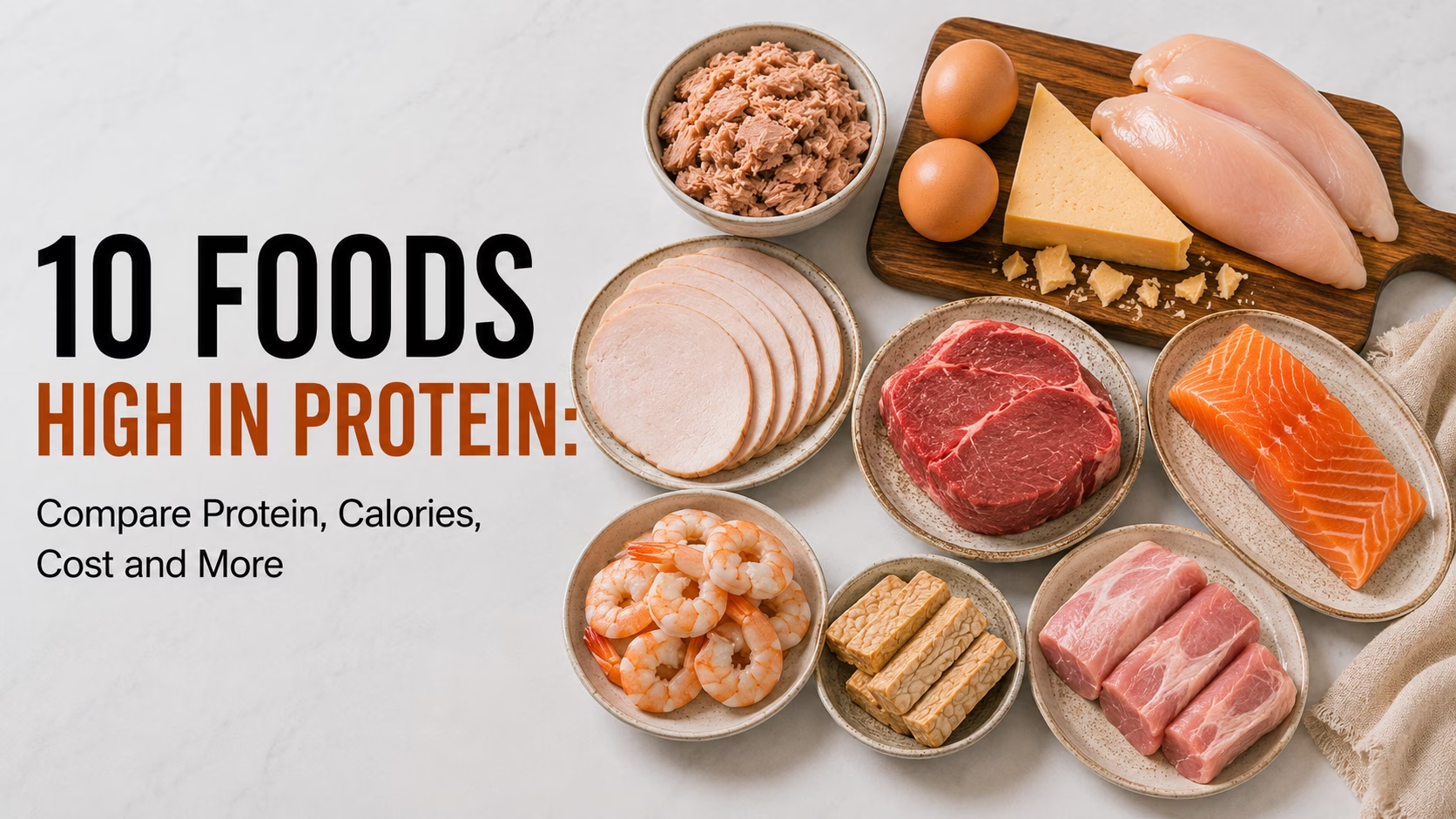
Protein is essential for building and maintaining tissues, producing enzymes and hormones, supporting immune function, and carrying out many other processes in the body.
But choosing a good protein food is not simply about finding the food with the highest number of grams of protein.
A food may be high in protein but also relatively high in calories, sodium, or saturated fat. Another may provide slightly less protein but offer useful nutrients such as omega-3 fatty acids, calcium, iron, or fiber.
Cost matters too.
That is why this guide compares 10 common protein-rich foods using several practical measures—not just protein per 100 grams.
We look at:
- Protein per 100 g
- How much food provides 30 g of protein
- Calories needed to get 30 g of protein
- Protein per 100 calories
- Protein quality and digestibility
- Other useful nutrients
- Estimated cost of getting 30 g of protein
The goal is not to identify one universally “best” protein food.
It is to help you understand the trade-offs so you can choose protein foods that fit your diet, goals, budget, and preferences.
Important: Nutrition values vary by food variety, brand, preparation method, serving size, and whether a food is measured raw, dry, or cooked. The figures in this article are approximate reference values rather than exact values for every product.
10 High-Protein Foods at a Glance
Here is the quickest way to compare the 10 foods in this guide.
The ranking below is based mainly on protein concentration per 100 g—not overall healthfulness.
| Food | Approx. Protein / 100 g | Food Needed for 30 g Protein | Approx. Calories for 30 g Protein |
|---|---|---|---|
| Parmesan cheese | 35–36 g | 83–86 g | 330–370 kcal |
| Chicken breast | 30–31 g | 97–100 g | 160–170 kcal |
| Turkey breast | ~29 g | ~103 g | 140–165 kcal |
| Tuna | 28–30 g | 100–107 g | 130–160 kcal |
| Lean beef | 27–30 g | 100–111 g | 170–245 kcal |
| Pork tenderloin | ~26 g | ~115 g | 160–195 kcal |
| Salmon | 25–26 g | 115–120 g | 230–250 kcal |
| Shrimp | ~24 g | ~125 g | 120–140 kcal |
| Tempeh | 19–21 g | 143–158 g | 270–330 kcal |
| Whole eggs | 12–13 g | 231–250 g | 325–385 kcal |
This table already shows why protein per 100 g tells only part of the story.
Parmesan contains the most protein by weight among the foods compared here, but lean foods such as shrimp, tuna, chicken, and turkey generally provide more protein for fewer calories.
Salmon provides fewer grams of protein per calorie than very lean fish or poultry, but it also provides omega-3 fatty acids.
Tempeh provides plant protein together with fiber.
Eggs are less protein-dense by weight but contain highly digestible, high-quality protein together with several important micronutrients.
There is no single winner on every measure.
How We Compared These Foods
To make the comparison more useful, we use the same basic measures for each food.
Protein per 100 g
This shows how concentrated the protein is by weight.
It is useful, but it should not be treated as an overall nutrition ranking.
Food Needed for 30 g of Protein
Instead of looking only at percentages, this calculation shows how much of each food you would need to eat to obtain approximately the same amount of protein.
Thirty grams is used as a simple comparison point. It is not intended to suggest that everyone needs exactly 30 g of protein at every meal.
Calories for 30 g of Protein
This helps show the difference between protein concentration and protein-to-calorie efficiency.
Two foods can provide the same amount of protein while providing very different amounts of energy.
Protein Quality and Digestibility
Protein quality considers whether a food provides the essential amino acids required by the body.
Digestibility refers to how effectively protein can be digested and made available.
These concepts are more meaningful than giving foods a simple “absorption rate.”
Cost for 30 g of Protein
Food prices can be difficult to compare because different foods contain different amounts of protein.
Instead of looking only at price per kilogram, we estimate how much it costs to obtain approximately 30 g of protein from each food.
Other Nutrients
Protein is only one part of a food.
We also consider nutrients such as omega-3 fatty acids, calcium, iron, zinc, fiber, vitamin B12, selenium, and other nutrients that may influence why someone chooses one protein source over another.
Methodology note: Nutrition figures were compiled from established food-composition references including USDA FoodData Central. Values were standardized where possible to make the foods easier to compare. Calculations for 30 g of protein, protein per 100 calories, and estimated cost per 30 g of protein were derived from the reference values shown in this article. Because nutrient composition and retail prices vary by product, preparation method, location, and time, the results should be treated as practical comparison estimates rather than exact universal values.
10 Foods High in Protein
1. Parmesan Cheese
Parmesan is one of the most protein-dense foods in this comparison.
It commonly provides approximately 35–36 g of protein per 100 g, depending on the product.
That means roughly 83–86 g of Parmesan can provide about 30 g of protein.
However, protein concentration does not make Parmesan the “best” protein food overall.
What Else Does Parmesan Provide?
Parmesan can provide:
- Calcium
- Phosphorus
- Vitamin B12
- Fat
It can also contain a considerable amount of sodium.
Because Parmesan is relatively energy-dense, obtaining 30 g of protein from it may provide roughly 330–370 calories.
When Might Parmesan Make Sense?
Parmesan can be useful when you want to add protein, calcium, and flavor to foods such as:
- Pasta
- Salads
- Soups
- Risotto
- Roasted vegetables
It is better thought of as a nutrient-dense ingredient than as a lean protein source.
2. Chicken Breast
Chicken breast is one of the most practical high-protein foods.
Cooked chicken breast commonly provides around 30–31 g of protein per 100 g, depending on the specific cut and preparation method.
Approximately 97–100 g can therefore provide around 30 g of protein.
Why Is Chicken Breast Popular?
Chicken breast combines several useful characteristics:
- High protein content
- Relatively low calorie content
- Wide availability
- Versatility
- Easy meal preparation
Getting 30 g of protein from chicken breast may provide approximately 160–170 calories.
That gives chicken breast a high protein-to-calorie ratio.
What Else Does Chicken Provide?
Chicken breast can provide nutrients including:
- Vitamin B6
- Niacin
- Selenium
- Phosphorus
It can work well in rice bowls, salads, sandwiches, wraps, soups, and stir-fries.
3. Turkey Breast
Turkey breast is another lean source of high-quality protein.
Many cooked preparations provide approximately 29 g of protein per 100 g.
Around 103 g of turkey breast can therefore provide approximately 30 g of protein.
What Else Does Turkey Provide?
Turkey can provide:
- Selenium
- Vitamin B6
- Niacin
- Phosphorus
Fresh Turkey and Processed Turkey Are Different
Fresh turkey breast and processed turkey products should not automatically be treated as nutritionally identical.
Processed turkey slices and similar products may contain substantially more sodium.
If you regularly buy processed turkey, checking the nutrition label can help you compare products.
4. Tuna
Tuna is highly protein-dense.
Depending on the species and preparation, tuna can provide approximately 28–30 g of protein per 100 g.
Around 100–107 g can therefore provide about 30 g of protein.
It is also one of the more calorie-efficient options in this comparison.
What Else Does Tuna Provide?
Tuna can provide:
- Vitamin B12
- Selenium
- Niacin
- Other micronutrients
What Should You Consider?
Different tuna species can contain different amounts of mercury.
People who eat seafood frequently should vary their seafood choices and follow relevant food-safety guidance.
Canned tuna products can also differ considerably in sodium, oil content, and calorie content, so checking the label is useful.
5. Lean Beef
Lean beef can provide approximately 27–30 g of protein per 100 g, depending on the cut and preparation.
Around 100–111 g can provide approximately 30 g of protein.
What Makes Beef Different?
Beef is particularly notable for providing protein together with nutrients such as:
- Iron
- Zinc
- Vitamin B12
- Selenium
This makes beef different from simply choosing a food for protein concentration alone.
What Should You Consider?
Different beef cuts can have very different fat and calorie contents.
Choosing a leaner cut generally increases the amount of protein relative to calories.
6. Pork Tenderloin
Pork tenderloin provides approximately 26 g of protein per 100 g.
Around 115 g can provide approximately 30 g of protein.
It is considerably leaner than many higher-fat pork cuts.
What Else Does Pork Tenderloin Provide?
Pork tenderloin can provide:
- Thiamin
- Vitamin B6
- Selenium
- Phosphorus
This makes it another useful option for people looking for a relatively lean animal-protein source.
7. Salmon
Salmon provides approximately 25–26 g of protein per 100 g.
You would need around 115–120 g to obtain approximately 30 g of protein.
That amount may provide roughly 230–250 calories, depending on the type of salmon and preparation.
This is more than very lean foods such as shrimp, tuna, or chicken breast.
But calories do not tell the whole story.
Why Choose Salmon?
Salmon provides protein together with:
- Omega-3 fatty acids
- Vitamin B12
- Vitamin D
- Selenium
Its higher calorie content is partly related to its higher fat content, including omega-3 fatty acids.
Salmon is therefore a good example of why the food with the fewest calories is not automatically the most nutritious choice.
8. Shrimp
Plain cooked shrimp provides approximately 24 g of protein per 100 g.
Around 125 g can provide approximately 30 g of protein.
That may provide roughly 120–140 calories, making shrimp one of the most protein-efficient foods in this comparison.
What Else Does Shrimp Provide?
Shrimp can provide:
- Selenium
- Vitamin B12
- Iodine
- Other minerals
Preparation matters.
Plain cooked shrimp and deep-fried or heavily sauced shrimp can have very different calorie, fat, and sodium profiles.
9. Tempeh
Tempeh is the main plant-based protein food included in this comparison.
Depending on the product, it commonly provides around 19–21 g of protein per 100 g.
Approximately 143–158 g can provide around 30 g of protein.
Why Is Tempeh Useful?
Tempeh combines something that most of the animal foods above do not:
Protein + fiber
It can also provide nutrients including:
- Iron
- Magnesium
- Other nutrients from soybeans
Tempeh is particularly useful for vegetarian and vegan diets and demonstrates why protein comparisons should include more than animal foods.
10. Whole Eggs
Whole eggs provide approximately 12–13 g of protein per 100 g.
That makes them less protein-dense by weight than the meats, seafood, cheese, and tempeh included above.
You would need roughly 231–250 g of whole egg to obtain approximately 30 g of protein.
That amount may provide roughly 325–385 calories.
So why are eggs still considered an excellent protein food?
Protein Concentration Is Not Protein Quality
Egg protein is highly digestible.
Classic FAO reference data report true protein digestibility of approximately 97 ± 3% for egg protein.
Eggs can also provide nutrients such as:
- Choline
- Vitamin B12
- Selenium
- Riboflavin
- Other micronutrients
Eggs demonstrate an important principle:
Ranking lower in protein per 100 g does not mean a food is nutritionally inferior.
What Does 30 g of Protein Actually Look Like?
Protein per 100 g is useful for comparing food composition.
For everyday eating, however, another question may be more practical:
How much food do I actually need to eat to get the same amount of protein?
| Food | Approx. Food for 30 g Protein | Approx. Calories |
|---|---|---|
| Parmesan | 83–86 g | 330–370 kcal |
| Chicken breast | 97–100 g | 160–170 kcal |
| Turkey breast | ~103 g | 140–165 kcal |
| Tuna | 100–107 g | 130–160 kcal |
| Lean beef | 100–111 g | 170–245 kcal |
| Pork tenderloin | ~115 g | 160–195 kcal |
| Salmon | 115–120 g | 230–250 kcal |
| Shrimp | ~125 g | 120–140 kcal |
| Tempeh | 143–158 g | 270–330 kcal |
| Whole eggs | 231–250 g | 325–385 kcal |
This comparison reveals something that protein per 100 g alone cannot.
For example, Parmesan contains more protein per 100 g than shrimp.
But getting 30 g of protein from Parmesan generally comes with substantially more calories than getting the same amount of protein from plain shrimp.
That does not make Parmesan “bad.”
It simply makes the two foods useful for different reasons.
Which Foods Give You the Most Protein for Your Calories?
Another way to compare protein foods is to ask:
How many grams of protein do you get for every 100 calories?
| Food | Approx. Protein / 100 Calories |
|---|---|
| Shrimp | 22–25 g |
| Tuna | 19–22 g |
| Turkey breast | 18–21 g |
| Chicken breast | 18–19 g |
| Pork tenderloin | 15–19 g |
| Lean beef | 12–17 g |
| Salmon | 12–13 g |
| Tempeh | 9–11 g |
| Whole eggs | 8–9 g |
| Parmesan | 8–9 g |
This measure can be particularly useful if you want to increase protein intake without adding a large amount of calories.
But it should still not be treated as an overall health ranking.
Foods that contain more calories may also provide nutrients that very lean foods do not.
Protein Quality and Digestibility
Protein quantity is easy to measure.
Protein quality is more complicated.
Proteins are made from amino acids. Nine amino acids are considered essential because the body cannot produce enough of them and they need to come from the diet.
Protein quality therefore considers factors such as:
- Essential amino-acid composition
- Digestibility
- Availability of indispensable amino acids
Many animal foods—including eggs, meat, fish, poultry, milk, and dairy products—provide all nine essential amino acids in useful proportions.
Soy foods such as tempeh and tofu can also provide high-quality plant protein.
What Does Protein Digestibility Mean?
Digestibility describes how much of a food’s protein can be digested and made available.
Classic FAO reference values for true protein digestibility include approximately:
| Protein Source | Approx. True Digestibility |
|---|---|
| Egg | 97% |
| Milk / cheese | 95% |
| Meat / fish | 94% |
| Rice | 88% |
| Soy flour | 86% |
| Maize | 85% |
| Beans | 78% |
These figures should be treated as reference values rather than exact “absorption percentages” for every person or every food product.
Modern protein-quality approaches are more sophisticated.
For example, DIAAS considers the digestibility of individual indispensable amino acids rather than treating protein quality as a single simple absorption percentage.
Does That Mean Animal Protein Is Always Better?
No.
Protein quality is only one characteristic of a food.
Plant foods can contribute substantially to total protein intake and may provide other nutrients such as fiber.
Soy foods, legumes, nuts, seeds, peas, and grains can all contribute protein as part of a varied diet.
The quality of the overall diet matters more than whether every individual food has the highest possible protein-quality score.
How Much Protein Do You Need?
Protein requirements vary according to factors such as:
- Body weight
- Age
- Physical activity
- Growth
- Energy intake
- Health status
For healthy adults, the WHO/FAO/UNU reference level is approximately 0.83 g of protein per kilogram of body weight per day.
For example:
| Body Weight | Approx. Protein / Day |
|---|---|
| 50 kg | 42 g |
| 60 kg | 50 g |
| 70 kg | 58 g |
| 80 kg | 66 g |
| 90 kg | 75 g |
These are general reference values rather than individualized prescriptions.
What If You Exercise Regularly?
People who exercise regularly may require more protein.
The International Society of Sports Nutrition states that approximately 1.4–2.0 g/kg/day is sufficient for most exercising individuals.
For a 70 kg person, that corresponds to approximately:
98–140 g of protein per day.
Individual needs can vary according to training type, training volume, total energy intake, body composition, goals, and other factors.
People with specific medical conditions or nutritional needs should seek individualized guidance from a qualified healthcare professional or registered dietitian.
How Much Does 30 g of Protein Cost?
Price can change the answer to “Which protein food should I buy?”
The cheapest food per kilogram is not necessarily the cheapest source of protein.
A useful comparison is:
Cost per 30 g of protein
The figures below use illustrative 2026 retail reference estimates for Malaysia and the United States.
They are intended for comparison—not as exact national prices.
Food prices can vary substantially according to:
- Country
- City
- Retailer
- Brand
- Package size
- Fresh or frozen form
- Season
- Promotions
- Product quality
- Preparation state
| Food | Approx. Malaysia Cost for 30 g Protein | Approx. U.S. Cost for 30 g Protein |
|---|---|---|
| Chicken breast | RM1.34 | US$0.56 |
| Whole eggs | RM2.50 | US$1.39 |
| Tempeh | RM3.00 | US$0.99 |
| Pork tenderloin | RM3.46 | US$1.02 |
| Lean beef | RM4.74 | US$1.62 |
| Tuna | RM5.69 | US$0.88 |
| Shrimp | RM6.25 | US$2.20 |
| Parmesan | RM7.18 | US$2.24 |
| Turkey breast | RM7.24 | US$1.37 |
| Salmon | RM9.41 | US$2.77 |
Why Compare the Cost of 30 g of Protein?
Imagine two foods.
Food A costs RM2 per 100 g but contains only 10 g of protein.
Food B costs RM3 per 100 g but contains 30 g of protein.
Food A looks cheaper when you compare package price.
But Food B gives you three times as much protein.
That is why comparing the cost of obtaining the same amount of protein can be more useful than comparing price by weight alone.
In this example comparison, chicken breast provides a relatively large amount of protein for a relatively low estimated cost.
Salmon is more expensive as a protein source, but it also provides nutrients such as omega-3 fatty acids that chicken breast does not provide in comparable amounts.
Price should therefore be considered together with the rest of the nutritional profile.
Price Note: Prices are approximate 2026 retail reference estimates used for comparison. Actual prices vary by country, retailer, brand, package size, season, availability, and promotions.
Which Protein Food Is Right for You?
There is no single best protein food for everyone.
The better question is:
What are you trying to get from the food?
| Your Priority | Good Choices to Consider |
|---|---|
| Highest protein concentration | Parmesan, chicken breast, turkey, tuna |
| More protein with fewer calories | Shrimp, tuna, chicken breast, turkey |
| High-quality protein | Eggs, fish, meat, poultry, dairy, soy foods |
| Protein + omega-3 | Salmon and other oily fish |
| Protein + iron | Lean beef, seafood, legumes, soy foods |
| Protein + calcium | Milk, yogurt, cheese, Parmesan, fortified alternatives |
| Protein + fiber | Tempeh, beans, lentils and other legumes |
| Lower-cost protein | Chicken, eggs, tempeh, tofu, beans, lentils |
| Vegetarian | Eggs, dairy, soy foods, legumes, nuts and seeds |
| Vegan | Tempeh, tofu, edamame, legumes, nuts, seeds and grains |
| Halal | Halal-certified meat, fish, eggs, dairy and plant proteins |
If Calories Are Your Main Priority
Lean protein sources such as shrimp, tuna, chicken breast, and turkey generally provide large amounts of protein relative to their calorie content.
If Overall Nutrition Is Your Main Priority
Do not look only at protein grams.
Different foods provide different advantages.
For example:
- Salmon provides omega-3 fatty acids.
- Lean beef provides iron, zinc, and vitamin B12.
- Dairy foods can provide calcium.
- Eggs provide choline and other micronutrients.
- Tempeh provides protein together with fiber.
If Budget Is Your Main Priority
Compare the cost of obtaining the same amount of protein rather than simply choosing the food with the lowest price per kilogram.
Local prices matter greatly.
Chicken may be economical in one country while eggs, tofu, tempeh, beans, or lentils may provide better value somewhere else.
If You Eat a Plant-Based Diet
You do not need meat to obtain protein.
Useful sources include:
- Tempeh
- Tofu
- Edamame
- Beans
- Lentils
- Peas
- Nuts
- Seeds
- Whole grains
A varied plant-based diet can provide protein from multiple sources while also contributing fiber and other nutrients.
The Most Important Thing to Remember
The food with the most protein is not automatically the best protein food for you.
Protein concentration tells you how much protein is present.
Protein per calorie tells you how efficiently the food provides protein relative to energy.
Protein quality tells you something about essential amino acids and digestibility.
Cost per 30 g protein tells you something about affordability.
And the rest of the nutritional profile tells you what else comes with the protein.
That is why a useful diet rarely depends on only one protein source.
A varied diet can include different protein foods for different reasons.
You might choose chicken because it is lean and affordable, salmon because it provides omega-3 fatty acids, eggs because they are practical and highly digestible, lean beef for iron and vitamin B12, and tempeh for plant protein and fiber.
The goal is not to find one perfect food.
It is to choose a combination that works for your overall diet.
Key Takeaways
- Protein per 100 g is useful, but it is not an overall health ranking.
- Lean foods such as shrimp, tuna, chicken breast, and turkey generally provide large amounts of protein relative to calories.
- Foods such as salmon, eggs, beef, dairy, and tempeh provide different nutrients in addition to protein.
- Protein quality depends on factors including essential amino acids and digestibility; egg, dairy, meat, fish, and soy foods can all provide high-quality protein.
- Cost per 30 g of protein can be more useful than package price when comparing protein affordability.
- There is no single best protein food for everyone. Your goals, overall diet, budget, dietary pattern, and preferences all matter.
Frequently Asked Questions
What Food Is Highest in Protein?
It depends on which foods are included and whether they are measured raw, cooked, dried, or concentrated.
Among the everyday foods compared in this guide, Parmesan, chicken breast, turkey breast, tuna, and lean beef are particularly protein-dense by weight.
That does not mean they are automatically the best overall choices.
What Is the Best Source of Protein?
There is no single best protein source.
Eggs, fish, poultry, meat, dairy, soy foods, beans, lentils, nuts, and seeds can all contribute protein.
The best choices depend on your nutritional needs, calorie goals, budget, dietary pattern, and preferences.
Is Egg Protein Highly Digestible?
Yes.
Classic FAO reference data report true protein digestibility of approximately 97 ± 3% for egg protein.
Eggs therefore provide highly digestible, high-quality protein even though they contain fewer grams of protein per 100 g than many meats and seafoods.
Is Plant Protein as Good as Animal Protein?
Plant proteins can contribute substantially to adequate protein intake.
Protein quality and digestibility vary between foods, whether plant or animal.
Soy foods such as tofu and tempeh are particularly useful plant protein sources.
Beans, lentils, peas, nuts, seeds, and grains can also contribute protein as part of a varied diet.
How Much Protein Should I Eat If I Exercise?
The International Society of Sports Nutrition states that approximately 1.4–2.0 g of protein per kilogram of body weight per day is sufficient for most exercising individuals.
Individual needs vary according to exercise type, training volume, calorie intake, body composition, and personal goals.
Do I Need Protein Powder?
Not necessarily.
Many people can obtain enough protein from ordinary foods.
Protein powder can be convenient in some circumstances, but it is not essential for everyone.
Evidence-Based Sources
The information in this guide is based on established food-composition, protein-requirement, protein-quality, and food-price reference sources.
World Health Organization / FAO / UNU
Protein and Amino Acid Requirements in Human Nutrition — used for general adult protein requirement reference values.
International Society of Sports Nutrition
Position Stand: Protein and Exercise — used for protein intake guidance for exercising individuals.
Food and Agriculture Organization of the United Nations
Dietary Protein Quality Evaluation in Human Nutrition — used for protein-quality concepts and DIAAS.
Food and Agriculture Organization of the United Nations
Energy and Protein Requirements — used for classic human true-protein-digestibility reference values.
USDA FoodData Central
Used as the primary food-composition reference for protein, calorie and nutrient comparisons.
Malaysia KPDN PriceCatcher
Used as one reference for Malaysian retail food-price observations.
Disclaimer
This article is for general informational and educational purposes only. It is not intended to provide personalized dietary, nutritional, or medical advice.
Nutritional needs vary according to factors such as age, body size, activity level, health status, and individual circumstances. People with specific medical conditions or nutritional needs should consult a qualified healthcare professional or registered dietitian for advice appropriate to their situation.